
NORTH CHINA & THE BOHAI RIM
A manufacturing base built around
materials, machinery and transport links.
From Beijing's engineering and project resources to Tianjin-Hebei manufacturing, Shandong's broad equipment base and Liaoning's heavy-industry depth, the region offers a connected manufacturing base for drawing-based, material-intensive and multi-process manufacturing.
THE REGIONAL FOUNDATION
A connected industrial region,
not a single factory cluster.
North China and the Bohai Rim combine engineering resources, large material industries, equipment manufacturing and a long industrial coastline. The practical advantage is the ability to place each process where the regional capability is strongest, then connect the work into one manufacturing route.
This is especially relevant to overseas buyers sourcing drawing-based components, machinery parts, industrial materials, fabricated assemblies or projects that move through several specialist processes.
THE INDUSTRIAL NETWORK
Seven regional roles,
connected by the requirement.
Beijing, Tianjin, Hebei, Shandong and Liaoning form the core operating geography. Shanxi and Inner Mongolia extend selected material, casting, forging and energy-industry routes.
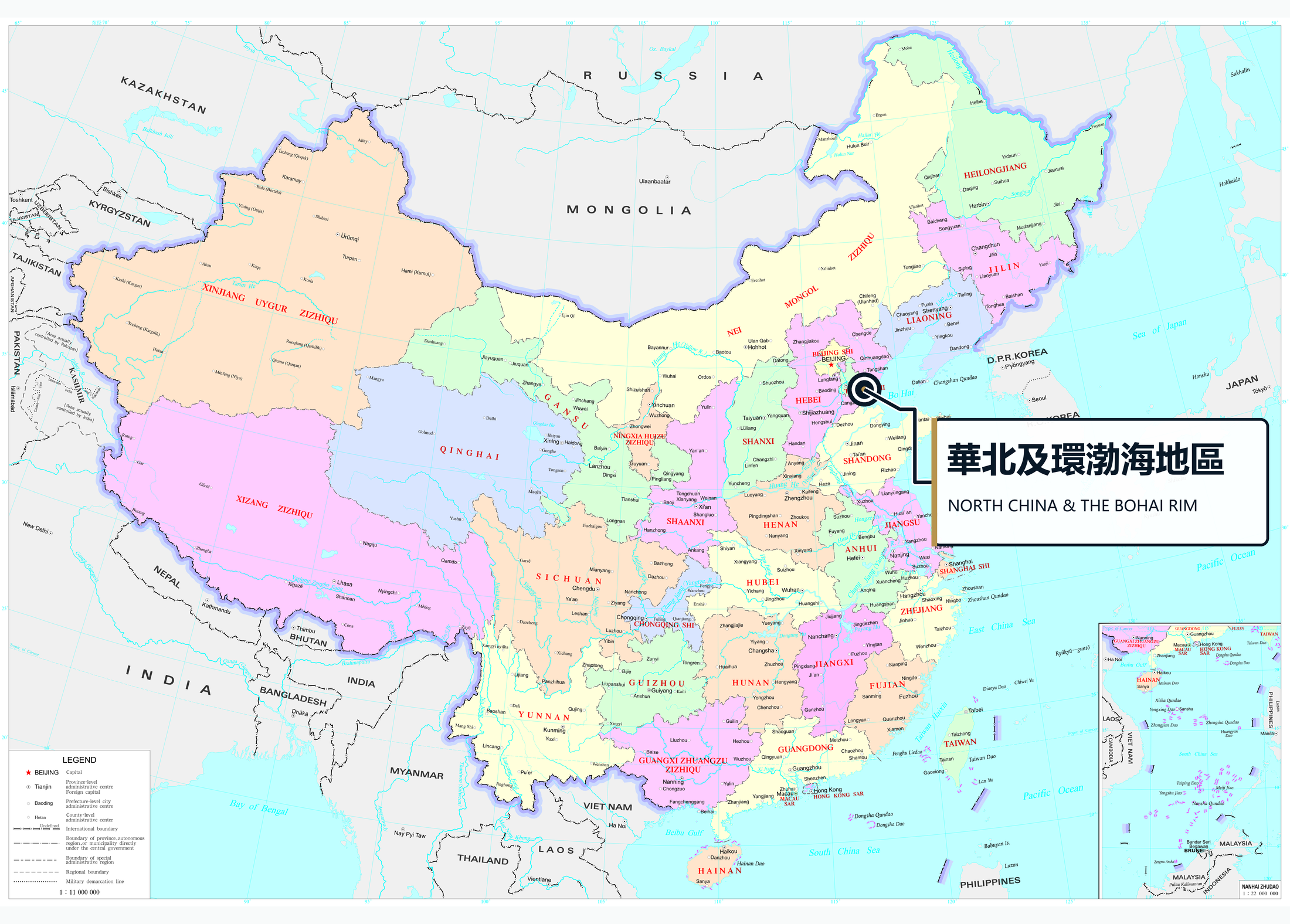
A capability map for supplier and process evaluation—not a claim that every product should be sourced in one region.
Beijing
Engineering and project interface
Technical communication, engineering resources and the China-side operating team that connects requirements with the wider manufacturing region.
1Tianjin
Manufacturing and seaport gateway
Hebei
Steel and metalworking depth
Shandong
Broad industrial coverage
Liaoning
Heavy-industry capability
Shanxi
Casting, forging and equipment extension
A useful upstream extension for cast products, forgings, flanges, energy equipment and selected metal-intensive manufacturing routes.
12Inner Mongolia
Materials and energy-industry extension
Rare-earth functional materials, advanced alloys and selected energy-equipment inputs extend the northern material base westward.
13One possible manufacturing chain
- 01Material
- 02Casting / forging
- 03Fabrication / machining
- 04Heat treatment
- 05Surface treatment
- 06Inspection / packing
NORTH, EAST OR SOUTH CHINA?
The best region depends on what drives the product.
China's manufacturing regions are complementary. The correct comparison is not which region is universally better, but which industrial structure fits the material, process, volume, precision and delivery model of the project.
North China & Bohai Rim
Materials, heavy and multi-process
A strong fit when steel or alloy content, component mass, casting or forging, large machining, fabrication and linked secondary processes drive the sourcing decision.
12457East China & Yangtze River Delta
Precision, innovation and export density
A highly integrated base for advanced equipment, automotive supply chains, electronics, instruments, industrial technology and high-value precision manufacturing.
14South China & Pearl River Delta
Electronics, appliances and fast-cycle production
Particularly strong in electronic information, smart appliances, automotive, robotics and supply chains that benefit from rapid product iteration.
15WHERE THE COST ADVANTAGE COMES FROM
Cost advantage is structural—not a promise of the lowest unit price.
North China becomes especially competitive when material weight, part size and the number of linked processes represent a meaningful share of total landed cost.
- 01
- 02
- 03
More than one northern gateway
Tianjin, Tangshan, Qingdao, Rizhao, Yantai, Dalian and Yingkou create route choices for containerised, oversized and material-heavy cargo.
6 - 04
A broader view of total operating cost
Parts of the network, including Liaoning and Shanxi, sit outside the higher-average eastern wage region. This can widen the supplier cost range, although an individual quotation still depends on process, equipment, utilisation and quality requirements.
11
SEA · AIR · RAIL
An export network with more than one way out.
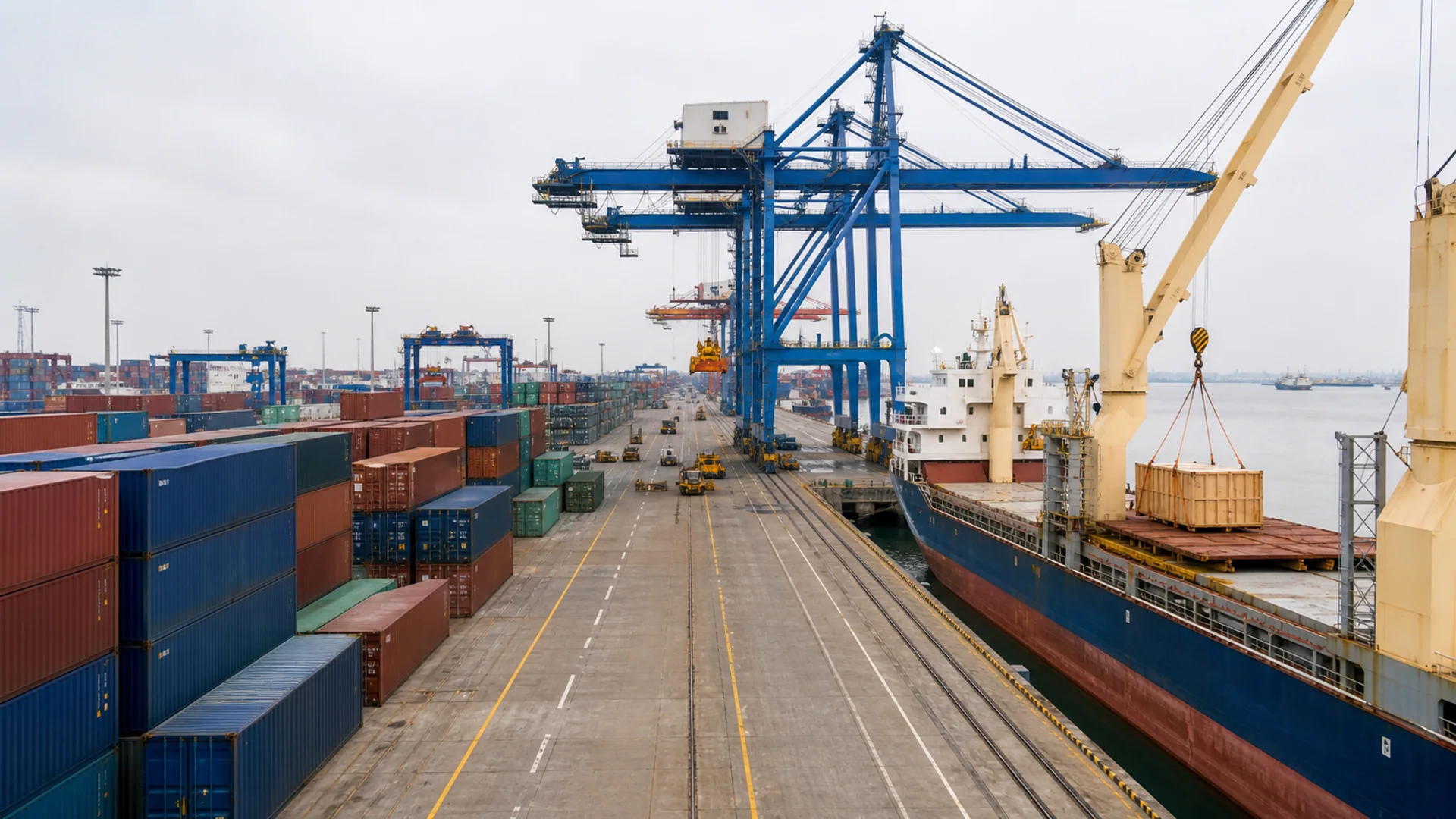
The region combines major seaports, international airports and overland freight-train hubs. That does not make every route equally suitable; it gives a project more realistic routing options based on cargo size, urgency and destination.
A multi-port export coast
In 2025, Tianjin handled 24.03 million TEU, Qingdao 32.89 million TEU and the wider Liaoning, Hebei and Shandong coast added multiple container and bulk gateways.
Tianjin · Tangshan · Qingdao · Rizhao · Yantai · Dalian · Yingkou6International air options for urgent cargo
Beijing Capital was one of six mainland airports handling more than one million tonnes of cargo and mail in 2025. The Beijing-Tianjin-Hebei airport group handled 2.122 million tonnes.
Beijing Capital · Beijing Daxing · Tianjin Binhai · Qingdao Jiaodong · Jinan Yaoqiang · Shenyang Taoxian · Dalian Zhoushuizi9Land routes towards Europe and Central Asia
Tianjin dispatched 668 China-Europe and China-Central Asia trains in 2025, while the Shenyang hub dispatched 665 China-Europe trains. Both connect the industrial region with overland and sea-rail options.
Tianjin regional hub · Shenyang national hub810MORNING SUNLIGHT ASIA IN THE REGION
A Hong Kong point of contact
with a Beijing-based team on the ground.
Morning Sunlight Asia Limited is the international commercial and communication point of contact. Our Beijing-based China-side team works inside the region to connect buyer requirements with suppliers and manufacturing resources.
Submit Your RequirementsRequirement and supplier communication
Clarify drawings, specifications, quantities and supplier questions with the people carrying out the work.
Factory and production follow-up
Visit suppliers, follow production milestones and keep project information available to the overseas buyer.
Multi-process management
Connect primary manufacturing with machining, heat treatment, surface treatment, inspection and packing where the project requires it.
OFFICIAL DATA & REFERENCE BASIS
The regional advantages on this page are tied to public evidence.
Statistics and policies can change. The dates below identify the material used for this page; routing, capacity and quotation conditions should be reconfirmed for an active project.
- 01Beijing Municipal Science & Technology Commission — seven Beijing-Tianjin-Hebei national advanced manufacturing clusters
- 02Hebei Department of Industry and Information Technology — Hebei steel output and national share
- 03Hebei Department of Industry and Information Technology — steel-sector supply-chain platform trial results
- 04Shandong Department of Industry and Information Technology — advanced manufacturing cluster structure
- 05Liaoning Department of Industry and Information Technology — 2025 equipment-manufacturing base data
- 06Ministry of Transport — 2025 port cargo and container throughput
- 07Ministry of Industry and Information Technology — 2024 national advanced manufacturing cluster list
- 08Tianjin Municipal Government — 2025 China-Europe and Central Asia freight-train activity
- 09Civil Aviation Administration of China — 2025 civil airport production bulletin
- 10Liaoning Department of Transport — 2025 Shenyang China-Europe freight-train activity
- 11National Bureau of Statistics — 2025 urban-unit average wages by region
- 12Shanxi provincial government information — high-end equipment manufacturing and industrial chains
- 13Inner Mongolia Autonomous Region Government Work Report — rare-earth materials and manufacturing clusters
- 14Jiangsu Department of Industry and Information Technology — 26 national advanced manufacturing clusters in the Yangtze River Delta
- 15Guangdong Provincial Government — advanced manufacturing priorities in the Greater Bay Area
- 16Hebei Department of Industry and Information Technology — Longyao green intelligent casting cluster
- 17Hebei Department of Industry and Information Technology — Yongnian fastener cluster and process chain
Research updated07 Aug 2026Recommended reviewAug 2027, or earlier if transport statistics or regional policy changes